


Multi-Dimension Risk Factors for Chronic Tendinopathy in Sport: A Literature Review
- Jonathan Deerman

- Nov 2, 2025
- 5 min read

Research Article:
Lopes, L. R., Machado, D. E., Goes, R. A., Amaral, M. V. G., Dias, F., Tavares, V., Medeiros, R., & Perini, J. A. (2025). Implications of tendinopathy on the sports career: Epidemiological and clinical profile of high-performance athletes. Physical Therapy in Sport, 72, 59–68. https://doi.org/10.1016/j.ptsp.2025.02.003
Application
With 10-50% of elite athletes having a chronic tendinopathy, what can be done to identify and manage risk factors? The notable findings from this research study are:
· Demonstrated that after age 25, risk increases substantially (up to 5 to 10-fold).
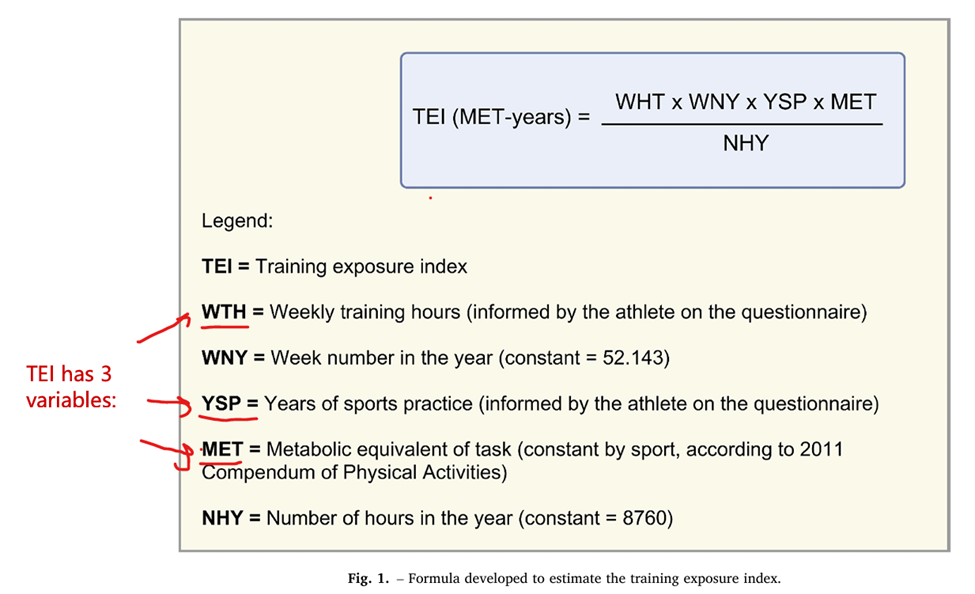
· Demonstrated that TEI (Training Exposure Index) can be used to predict risk factors.
· TEI variables are: Weekly training hours, years played in sport, and metabolic demands of sport
· Demonstrated that most athletes suffering from chronic tendinopathy have had >3 episodes in the past. This data should help drive the importance of effective interventions to prevent and treat root causes since a risk factor of future tendinopathy is multiple previous experiences.
· Higher BMI increases risk of patellar tendinopathy, but this study found that figure to be ≥25.0 kg/m2.
· Chronic and acute volumes of training load have been known to affect tendon health, but this study was able to demonstrate more precisely at what TEI levels does risk significantly increase and this significantly varies with sex.
· Determined athletes with nutritional guidance had significantly reduced risk of chronic tendon pain. This can be explained by the prescription of foods and supplements rich in collagen, which promote regeneration, reduce pain, and positively regulate metabolic pathways associated with muscle and tendon growth.
· Determined TEI affects males and females wildly different. For example, low or moderate TEI had about 2-fold INCREASED risk for females compared to the high and very high TEI levels. Thus, females had a nonlinear risk profile with TEI suggesting that more is better to some extent.
· Interestingly, the male sex demonstrated a nearly linear progression of prevalence of tendinopathy where increase in TEI always showed an increase in prevalence.
· Unique sex differences warrant further investigation to understand why the low and moderate TEI for females correlated with twice the prevalence of tendinopathy.
· Demonstrated higher prevalence of patellar tendinopathy in male athletes, whereas the frequency of Achilles tendinopathy, rotator cuff, and epicondyle tendinopathy was similar between the sexes.
· Know how to quantifiably manage chronic and acute workloads as a major risk factor.
Nearly 50% of females with tendinopathy reported using oral contraceptives, thus future research needs to determine if this is a risk factor.


Multi-Factorial Risk Factors:

Now, for those wanting to have more understand. Below is a brief review of this study:
Summary:
Tendinopathy is a common aliment that befalls the average person, however, prevalence is multiple times higher in elite athletes. Identifying risks factors and ways of earlier detection need deeper understanding in realms of sports science. If nearly half of all elite athletes today have at least one notable tendinopathy, then studying prevention and predictive conditions is fruitful areas for research. More data needs to be collected about the athlete’s risk factors to be able to prevent tendinopathy The following have previously been thought to affect risk:
· age
· sex
· BMI (body mass index)
· mental disorders (i.e. depression or loneliness)
· chronic and acute training loads
· biomechanical factors of specific sports
· genetic factors
· joint mobility
· muscle strength/ weakness
· metabolic disorders
However, more conclusive, and specific correlational data is missing in research. Other external risk factors have also been previously implicated, but their quantitative effects are not yet well defined. These risk factors include:
· improper training programming
· certain antibiotics
· high volume training
· local physical environment.
Therefore, the purpose of this cross-sectional study is to identify prevalence and predisposing elements of chronic tendinopathy in elite athletes. A goal would then be to create a model whereby modifications to athlete’s lifestyle and training could prevent such high tendinopathy prevalence. The major research question concerned validating and quantifying previously established tendinopathy risk factors and to determine the degree TEI (“training exposure index”) was also correlated. TEI is a formula which calculates the cumulative lifelong volume of sport and training of the athlete.
831 elite athletes (professional and/ or performing at national or international levels) were recruited across various sports. If an athlete did not have tendinopathy presently or in the past, these were allocated at the comparison group. The case group were all other athletes who presently or previously had at least one chronic tendinopathy. If an athlete had chronic tendinopathy and muscle or joint dysfunction, these athletes were not used in the study. Therefore, the researchers investigated previously established risk factors for chronic tendinopathy and explored the prevalence in their case group in a qualitative manner. Critical variables included the intrinsic contributing factors, extrinsic contributing factors, sport itself, and TEI. While critical results were the existence of at least one chronic tendinopathy. Further critical results were which specific tendons (i.e. patella, Achilles, etc.) and which specific sports had the highest prevalence.
Analysis/Critique
The authors did establish positive correlation with very high TEI and increased prevalence of tendinopathy. Other research (and natural intuition) demonstrates that only so much training volume and training years at peak intensities can be sustained before physiological breakdown. However, this study does provide valuable insight by quantifying specific TEI and specific sports that predispose to the higher risk factors. For example, they discovered that if only one match was added per week in handball players, then prevalence would increase 30%. Another fruitful finding was the correlation between specific tendons that are at higher risks with certain TEI. This data could help for design more specific training and lifestyle modifications.
One admitted confounding variable included nutritional intake which merits further investigation into how diet can predispose or prevent tendinopathy. A 2022 study was referenced to hypothesize that diets and supplements in college could be why 2-fold decrease in prevalence occred. Since this variable was not accounted for originally, future studies could be useful. Furthermore, since patient history was gathered using questionnaire format, some inaccuracies likely exist in remembering previous injuries, lifestyle factors, or existence of risk factors that were part of the critical variables. Therefore, some internal validity is lost.
Most research articles which were published within the last five to ten years were referenced to reinforce the current mechanisms and predisposing risk factors for tendinopathy. Much of their analysis revolved around the TEI which was a mathematical model previously established with Barbara E Ainsworth’s research, who had authored over 300 articles and is a current Regents Professor Emerita with Arizona State University. Multiple other studies from 2023 were cited explaining why they believed higher tendinopathy rates to exist in athletes over 25 years or about 10 years of higher TEI. One other risk factor found was a positive correlation with tendinopathy and having higher BMI (≥25.0 kg/m2). Their findings were supposed by a referenced 2022 systematic review with similar conclusions of increased BMI increasing tendinopathy in elite basketball players (just like this study found).


Comments